Now in beta — early access

Prove the work, not the paperwork.

Your safe systems of work — actually followed, on every site, by your own people and the contractors you bring in. Captured by the worker, on the job, in the moment.

Built for jobs where mistakes hurt people.

The problem

A plan on paper isn't proof on site.

Your own employees and the contractors you let on site — you're accountable for all of it. A safe system of work, a method statement, a RAMS — they only say what shouldhappen. They don't show what did.

  1. Oversight can’t scale to every job

    Whether it’s you, your HSE team or a network of supervisors — you can’t be on every site, on every shift. You trust your people to follow the plan and raise issues. That trust is the right call. It also leaves you blind to what really happened.

  2. A document is a promise, not proof

    They submit the paperwork, you accept it. It doesn’t mean the controls went in — or that anyone ever intended them to.

  3. Corners get cut quietly

    When a step is awkward, people work around it — your employees or a contractor. Small deviations, under the pressure to keep moving, stack up. You don’t find out until someone gets hurt.

When a small deviation tips over into an incident, nobody walks away clean — the worker carries the injury, their family carries the fallout, and the company carries the consequences.

Small deviations turn into bigger ones. Evidright catches them while they’re still small.

How Evidright works

The worker walks the plan, one step at a time.

Each step is a moment to stop, reflect, capture the real thing, and only then move on. No checklist culture. No box-ticking. Just proof the job was done as the plan said.

  1. Drop in the plan

    A RAMS, method statement, permit to work, isolation plan — any document that describes the work. Evidright reads it and turns it into a step-by-step walk.

  2. The worker walks it on their phone

    One step at a time. The plan is in front of them. They look at the real thing, take a photo, optionally dictate a note — then move on.

  3. A gate holds the job if something’s off

    Missing kit, wrong permit, control not in place — the worker flags it. The job pauses. A reviewer is notified. Nothing gets brushed past.

  4. Proof builds itself

    Every photo, every confirmation, every flag is time-stamped and attributed. Unchangeable. The work IS the report.

  5. The friction in your work surfaces

    Every flag, every workaround, every step that keeps going wrong gets captured. Patterns surface across sites and employees — so you can make the safe way the simple way, and the work itself runs better.

Compared to the alternatives

Audits show you a tidy version. Evidright shows the work.

Periodic audits and digital inspection software all rest on the same idea: someone from safety or management goes and looks, now and then. People know when they’re coming, so the site goes quiet, gets tidied, and the inspector sees a show. Evidright is built for the worker doing the work — not for the person who shows up to grade it.

The traditional path

Periodic audits

A safety manager or external auditor walks the site at intervals. They use a checklist, take notes, write a report.

  • Only happens now and then.
  • People know when it’s coming, so they put on a show.
  • The "evidence" is the auditor’s notes, not the work itself.
  • No data on the jobs that happened in between.

The digital path

Digital inspection software

The clipboard goes on a tablet. Same person, same model, just typing instead of writing.

  • The auditor is still the actor — not the worker doing the job.
  • The same prep-the-site dance happens before the visit.
  • It captures what was seen on the day, not what happens on the other days.
  • No friction signal — every visit is a fresh form, never learning.

Evidright

The worker proves the work

No auditor. The person doing the job walks the plan on their phone, capturing the real thing as they do each step.

  • Every job, not just the audited ones.
  • No show to put on — the worker IS the actor.
  • Evidence is the worker’s own photos at the moment of execution.
  • Friction patterns surface so the process actually improves over time.

The worker isn’t being policed by Evidright— they’re being supported. The app walks them through the work, removes friction where things don’t flow, and gives them a record they own. That’s why it gets used; that’s why the data is real.

Built for the worker

The worker owns the moment.

Evidright isn't looking over the worker's shoulder — it's in their hand. They confirm the controls are in place, they hold the evidence, and when something isn't right they raise it. That's how the work actually gets safer over time.

Ownership

The worker is the actor, not the audited. Their phone, their step, their confirmation.

Evidence they hold

Photos, notes and confirmations attributed to them — a record they own, that travels with them.

Raise it, improve it

Flagging a step that’s wrong isn’t getting in trouble — it’s how the process gets fixed for next time.

When the people doing the work own it, the evidence is real, the friction shows up early, and the same job runs safer and smoother next time. That’s the part audits and inspections can’t reach.

For your team

Know your employees worked safely.

Your own staff, on your own jobs. Every safety-critical step gets proven on the phone, in the moment. You see exactly what was done, by whom, where and when.

  • Give a worker a job; they open it on their phone and start.
  • Role-based access: who creates work, who reviews, who sees the proof.
  • Standing checks apply across every relevant job automatically.
  • Insights group repeated flags into patterns so you fix the system, not the symptom.
For contractors on your sites

Turn their RAMS into proof.

A contractor's document is a promise. Evidright is how that promise becomes evidence. They submit, you review and approve, they walk every control on their phone — and when the document expires, the system reminds them to refresh it before any new work happens.

  • One link. No account. They tap it and start on their phone.
  • You approve the document with a review period (3/6/12/24 months).
  • Need changes? Send back with a note — they see exactly what to fix.
  • Auto-reminders when the document is about to expire — they re-upload, you re-review.

Documents have a shelf life

Auto-renewal reminders, before things lapse.

You set how long a document is valid when you approve it. Before it expires, both you and the contractor get a reminder. New version goes through review. No work happens on a lapsed document, ever.

The engine

Evidence from the worker, in — proof of the work, out.

Under everything Evidright does is the same simple loop: the worker captures the real thing as they do it, and that becomes a digital record nobody can rewrite.

Goes in

Evidence from the worker Their safe system of work

Evidright

Comes out

Time-stamped, attributed proof Friction data to improve the work
Four real incidents

Different industries. Same pattern.

Across electricity, lifting, process safety, and working at height — the root cause is always the same. A plan existed. A procedure was written. At the moment of execution, the plan was not followed.

High voltage. 40% burns. A £3.2 million fine.

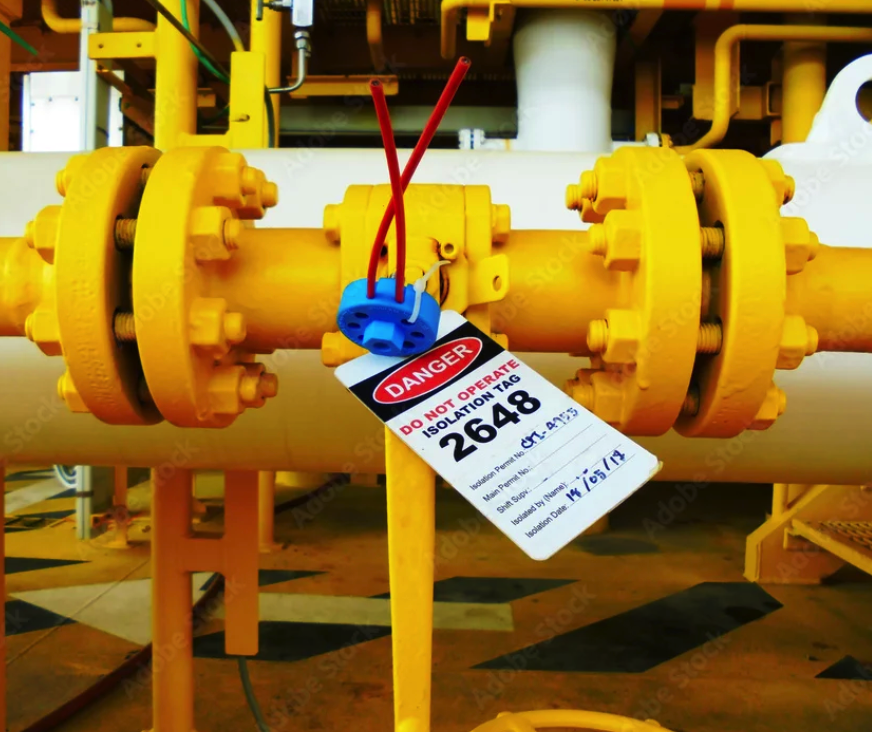
A contractor was sent to work near live high-voltage equipment. The circuit was supposed to be isolated. A safe exclusion distance was supposed to be in place. The contractor signed paperwork saying both were true. Neither was verified at the moment of work.

What happened

  • The isolation plan and the exclusion-distance standard existed on paper.
  • The circuit was never actually isolated, and no one checked the safe distance was really being held.
  • The worker took a high-voltage shock — burns to 40% of his body.

How Evidright would have stopped it

Evidright reads the RAMS and turns each named control — isolation, earth applied, voltage proven dead, exclusion distance — into a verification gate.

The worker on the job

  • The worker confirms and photographs each gate themselves, attached to their name, before climbing.
  • If a gate can’t be honestly confirmed, they flag it from the same screen — work pauses on record while the plan is safely adjusted and approved before work continues.

The contractor oversight loop

  • Oversight that the work was carried out safely as documented — every control evidenced by the worker on the job.
  • If something on site can’t be done as planned, management of change is verified and approved before work continues — not handled on a phone call.

In every case, the plan existed. The standard existed. The competence existed. What was missing was verification at the moment of execution.

Get in touch

Want to see this on your work?

Tell us about one job you can't be on, and we'll show you how Evidright would prove it. We usually reply within a working day.

What's this about?